
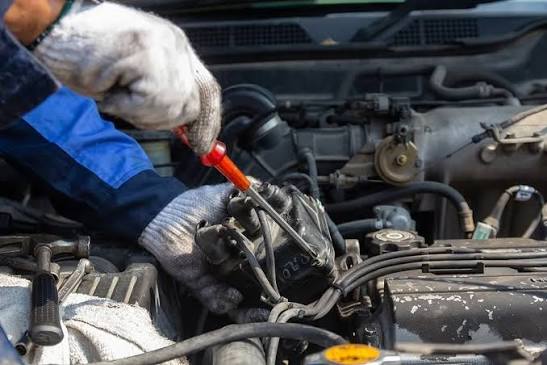
When traveling at high speed, it can be particularly unsettling when your vehicle starts to jerk or surge forward without warning. Jerking or surging can be a sign of a number of different issues, each with its own ease and cost of repair. Specificity with regards to the handling of the vehicle at higher speeds, throttle responsiveness, and unusual noises, can help a mechanic better identify your vehicle’s specific problem. When a vehicle receives an inconsistent or unbalanced flow of air and fuel, it will not run properly. An indication that a vehicle is not receiving the right mixture of air and fuel is if the vehicle jerks or surges forward at high speed. Several components of the fuel or air intake system could cause this jerking or surging sensation to happen. Issues within these systems can also cause fuel economy to worsen.
A top-rated mobile mechanic will come to your home or office to determine the reason for the sudden jerking or surging sensation. The mechanic will then provide a detailed inspection report outlining the cause of jerking sensation and the cost of any repairs that need to be made. A mechanic will first check your vehicle by plugging in a code reader/scanner into the vehicle’s computer. The computer should be able to provide the mechanic with a better picture of what specific part or parts are failing. If your vehicle has a bad or failing mass airflow sensor, the mechanic will begin by finding the sensor in the engine bay and checking for any signs of failure. The mechanic will check the wire harness connected to the sensor to ensure that all of wires are properly connected. After removing the sensor, the mechanic should be able to discover the nature of the failure and replace the sensor. In order to check for a vacuum leak, the mechanic will examine the vehicle’s vacuum hoses and gasket. If he or she finds the source of the leak, the mechanic will replace the failed components and start the engine to make sure the leak has been fixed. To check a bad fuel pump, a mechanic may have to remove the gas tank. Many modern cars have electric pumps located inside the gas tank. The mechanic will examine the fuel pump to see if it is the cause of the poor performance and jerking sensation. If it is the culprit, the mechanic will replace it and reinstall the gas tank, if necessary. In all cases, your mechanic will make the necessary repairs and start the engine to ensure that it is now running properly. Once the repairs are completed, the mechanic can use the code reader/scanner to remove error codes and turn off the Check Engine light.
A car that surges or jerks at high speed is potentially dangerous, especially in heavy traffic or in bad weather. If your vehicle jerks at high speed, you should stop driving it and have it inspected by a mechanic. Because many of the issues that would cause this jerking sensation also trigger a warning lights, being diligent and having a mechanic inspect a vehicle with a warning light can help limit potential damage and avoid more costly repairs.
Leave a comment
Your email address will not be published. Required fields are marked *
You must be logged in to post a comment.